
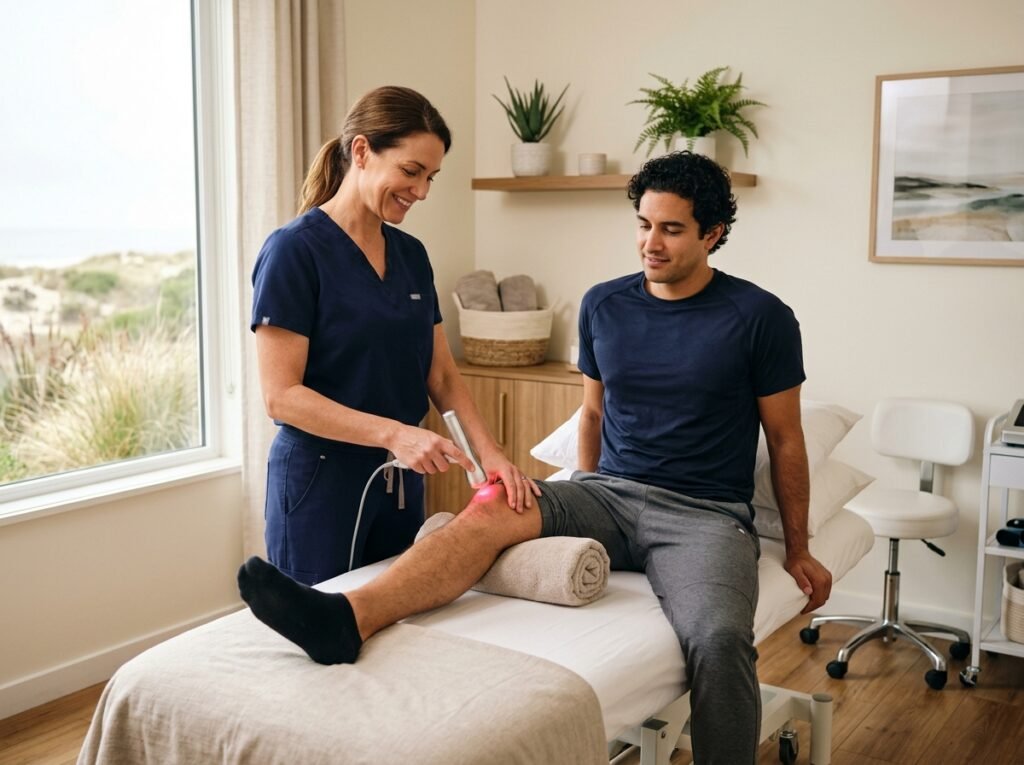
For decades, medicine treated chronic soft-tissue tension and inflammation through either invasive intervention or pharmaceutical suppression. Low-Level Laser Therapy (LLLT)—often termed photobiomodulation—represents a fundamentally different paradigm: fueling the cell’s own internal machinery to complete the repair process.
The Power of Photons in Human Tissue
Human tissue is responsive to light in ways analogous to how plant cells utilize sunlight for photosynthesis. When non-thermal, coherent laser light at specific nanometer wavelengths (such as 635nm red light) penetrates skin and muscle, it is absorbed by chromophores—light-sensitive receptors located within cellular mitochondria.
Cytochrome C Oxidase and ATP Generation
The primary chromophore stimulated during Low-Level Laser Therapy is cytochrome c oxidase, a vital enzyme in the mitochondrial respiratory chain. When energized by photons, cytochrome c oxidase accelerates the synthesis of Adenosine Triphosphate (ATP). ATP is the universal molecular currency of intracellular energy. By elevating ATP availability, the cell has the immediate biological fuel needed to repair damaged membranes, clear cellular waste, and synthesize new collagen fibers.
Down-Regulating Chronic Tissue Stress
In addition to energizing cellular repair, photobiomodulation facilitates the reduction of oxidative stress and balances local inflammatory mediators. Increased microcirculation delivers fresh oxygen and nutrients to chronically tight tissue, helping persistent knots and restricted joints regain comfortable flexibility.
“When we give the body the exact light signals and cellular energy it requires, the body’s natural regenerative intelligence takes over.” — Dr. Fred Lewin
What to Expect in Clinical Practice
At Mission Health & Wellness in Virginia Beach, Cold Laser Therapy is delivered in relaxed 10-to-20-minute sessions. The treatment is completely painless, produces no heat, and allows patients to immediately continue their day with zero downtime.